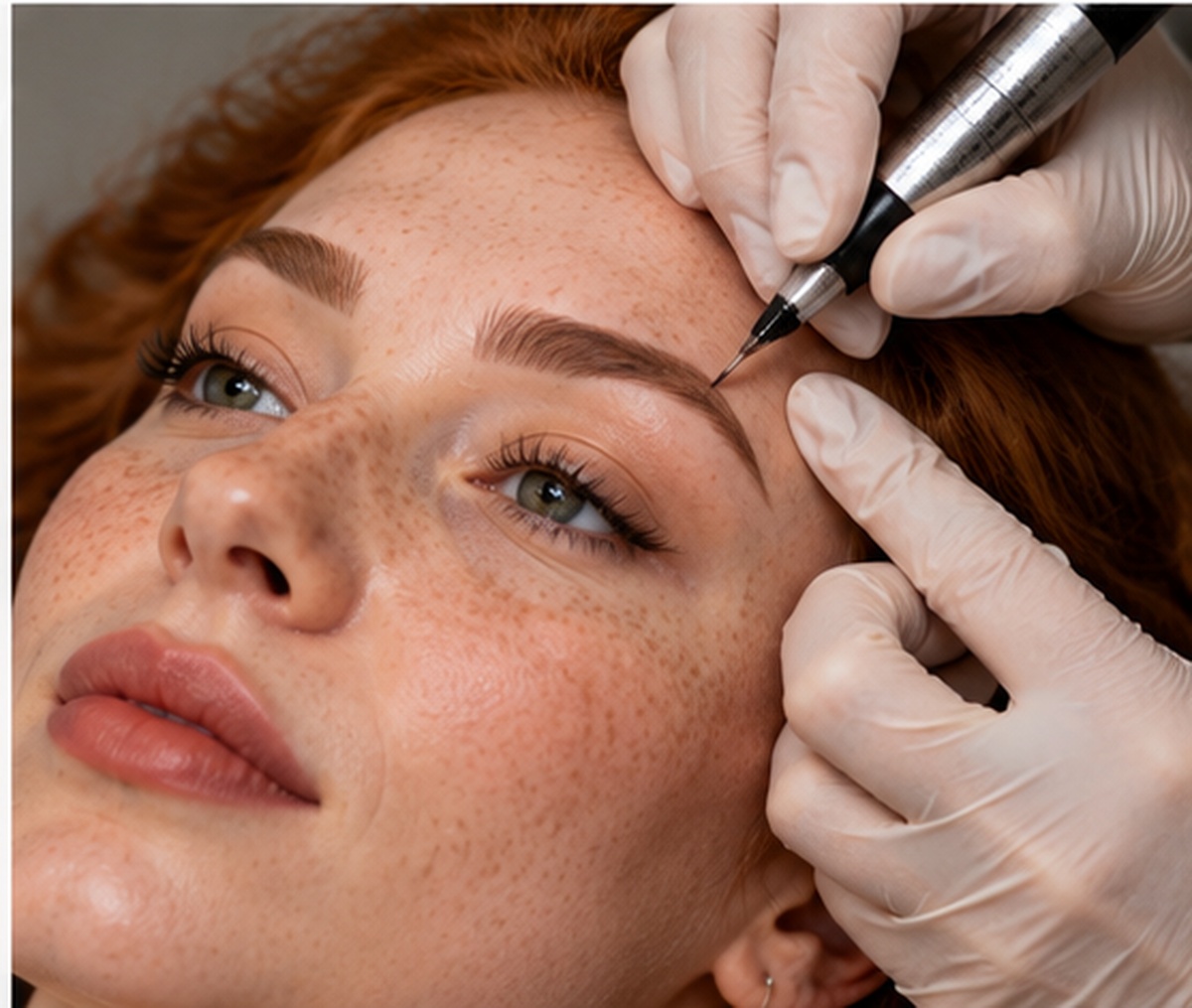
Microblading, Nano, or Ombré: Choosing Your Eyebrow Tattoo in Mississauga
Once a person decides they want an eyebrow tattoo, the next question is which kind. Microblading, nano brows, ombré powder brows, and combo brows all fall under the eyebrow tattoo umbrella, and they create different looks and suit different skin types. Choosing well is what separates brows a person loves from brows that are only fine, and the right choice depends on the individual, not on which technique is trendiest. Here is how to think about it, the way an experienced artist in Mississauga would walk a client through it.
No single eyebrow tattoo technique is best for everyone, which is exactly why a good studio offers several. Understanding what each one does, and which skin and style it suits, is what lets a Mississauga client make a confident choice rather than guessing.
Microblading: Crisp Hair Strokes by Hand
Microblading is the technique that made modern eyebrow tattoo famous. It uses a fine hand tool to deposit pigment in thin, crisp strokes that mimic individual brow hairs, creating a very natural, textured look. For someone with normal to dry skin who wants the most hair-like, natural result, microblading can be beautiful. Its strength is that fine, realistic texture.
Microblading does have a consideration worth knowing: on oily or very reactive skin, the fine strokes can blur or fade faster, because the oil and skin behaviour affect how the crisp lines heal and hold. This does not rule it out, but it is why an honest artist assesses the skin before recommending it. For the right skin type, microblading remains a wonderful eyebrow tattoo choice, and the artists at Xtremities help each Mississauga client judge whether their skin suits it.
Oily Skin Changes the Choice
Fine microblading strokes can blur or fade faster on oily skin, which is why nano brows and ombré powder brows, placed by machine, are usually recommended for oily or combination skin, while normal to dry skin can suit any eyebrow tattoo technique.
Ombré Brows Are the Most Versatile
Because soft shading holds better than fine strokes across skin types, ombré powder brows work well on nearly all skin, including oily skin, which makes them one of the most durable and versatile eyebrow tattoo options in Mississauga.
Combo Brows Blend Two Techniques
Combo or fusion brows use hair strokes at the front for natural texture and soft shading through the body and tail for density, giving a result that is both realistic and polished, ideal for those who want a middle ground.
Nano brows create a similar hair-stroke look to microblading, but with a digital machine and a single ultra-fine needle rather than a hand blade. The machine places the strokes with less trauma to the skin, and nano brows tend to retain better across a wider range of skin types, including oily skin where microblading can struggle. This is a large part of why nano brows have become the leading eyebrow tattoo technique in Mississauga in 2026, suited to the region's diverse skin types. For someone who wants natural hair strokes but has oily or combination skin, nano brows are often the better fit.
Ombré Powder Brows: Soft Shaded Definition
Ombré powder brows take a different approach. Instead of hair strokes, a machine builds a soft, shaded gradient across the brow, lighter at the front and more defined toward the tail, like a brow lightly filled in with powder makeup. The result is a polished, defined, made-up look rather than a raw hair-stroke texture. Ombré brows suit people who like a more finished brow, who wear brow makeup and want to replicate that look, and importantly they work well on nearly all skin types, including oily skin, because shading holds better than fine strokes. For many Mississauga clients, ombré powder brows are the most versatile and durable eyebrow tattoo option.
Combo Brows: The Best of Both
Combo brows, also called fusion brows, blend two techniques: hair strokes at the front of the brow for natural texture and soft shading through the body and tail for density and definition. The result has both the realism of strokes and the polish of shading, and it suits people who want a natural but full, defined brow. Combo brows are a popular choice for those who find pure microblading too subtle and pure ombré too solid, offering a middle ground that flatters many faces.
How to Choose in Mississauga
The right eyebrow tattoo technique depends on three things: skin type, desired look, and how the brow should wear over time. Oily or combination skin usually does best with nano brows or ombré, while normal to dry skin can suit any technique. Someone who wants the most natural, raw brow leans toward microblading or nano, while someone who wants a polished, filled look leans toward ombré, and combo brows serve those who want both. The most reliable way to choose is a consultation, where an experienced artist assesses the skin and features and recommends honestly. The team at xtremities.ca does exactly this for Mississauga clients, matching the technique to the person rather than pushing one option.
How Long Each Technique Lasts
Longevity is part of choosing an eyebrow tattoo technique, and it ties back to skin type. In general, shaded techniques like ombré powder brows tend to hold longer than fine hair-stroke techniques, because solid shading resists fading better than delicate lines, especially on oily skin. Microblading on drier skin can last well, while microblading on oily skin may fade faster. Nano brows, placed by machine, often retain better than hand microblading across skin types. Across all of them, an brow tattoo generally lasts one to three years before a refresh, and the exact timing depends on skin, lifestyle, sun exposure, and skincare. An honest artist sets realistic expectations about longevity for the chosen technique, which the team at Xtremities does for each Mississauga client.
Touch-ups are part of every technique. After the initial session, a touch-up once the brows have healed perfects the shape, strokes, and saturation, because skin heals individually and a second pass refines the result. After that, periodic refreshes maintain the look as the pigment softens. Planning for these from the start is part of understanding what an brow work involves, regardless of which technique a client chooses.
Why the Artist Matters More Than the Method
As much as the technique matters, the artist matters more. A experienced artist produces beautiful brows with microblading, nano, or ombré, while an unexperienced one produces poor results with any of them. Skill shows in the brow mapping that gives the face balance, the pigment selection that fades true, the depth and consistency of application, and the judgement to recommend the right technique for the client's skin in the first place. This is why choosing the studio and artist comes before choosing the technique. In Mississauga, that means a licensed studio compliant with Ontario Regulation 136/18, inspected by Peel Public Health, with experienced artists who offer the full range, which is exactly what Xtremities provides.
Start With a Consultation
With four strong brow tattoo techniques to choose from, the best first step is never to pick blind but to book a consultation. An experienced artist looks at the client's skin type, natural brows, face shape, and the look they want, then recommends the technique, or combination, that will suit them best and wear well over time. That professional judgement, grounded in seeing many brows heal across many skin types, is worth far more than guessing from photos online. A consultation also lets the client ask questions, see healed examples, and feel confident before committing. In Mississauga, Xtremities offers this consultation across its full range of brow techniques, so each client ends up with the brow work that genuinely fits them rather than the one that happened to be trending. That match between technique and person is what produces brows a client loves for years.
Whichever direction a client leans, the reassuring truth is that there is a brow technique suited to almost everyone, from the most natural hair-stroke look to a soft, polished finish. Matching that technique to the individual is the artist's job, and it is the single most important step in ending up with brows worth the investment. A thoughtful consultation in Mississauga is where that match is made, and where a client's questions are answered before anything begins.
There is a right brow technique for almost every face and skin type, and finding the one that fits is simply a matter of an honest, in-person assessment and an experienced hand to carry it out. Once that match between technique and person is made, the result is brows a client is glad to see in the mirror every single morning for years, which is the whole point of choosing carefully in the first place rather than settling for whatever happens to be popular.
Booking that first consultation is the easiest and most valuable step a Mississauga client can take toward brows they will love, because it replaces online guesswork with an expert, personalized plan built around their own skin type, natural brows, and features, which is the surest path to a brow result that looks natural, wears well, and is genuinely worth the investment over the years.
Whichever technique is chosen, the result depends on the artist's skill and the safety of the studio, so choosing a licensed, Peel-inspected studio compliant with Ontario Regulation 136/18 matters as much as the technique. With the right technique and a experienced artist, any of these brow tattoo methods can give brows a person loves for years. To find the right brow work for your skin and style, book a consultation at xtremities.ca, Xtremities Tattoo and Piercing in Mississauga, at (905) 897-3503.
Permanent makeup: before, immediately after, and healed – brow, eyeliner, and lip procedures
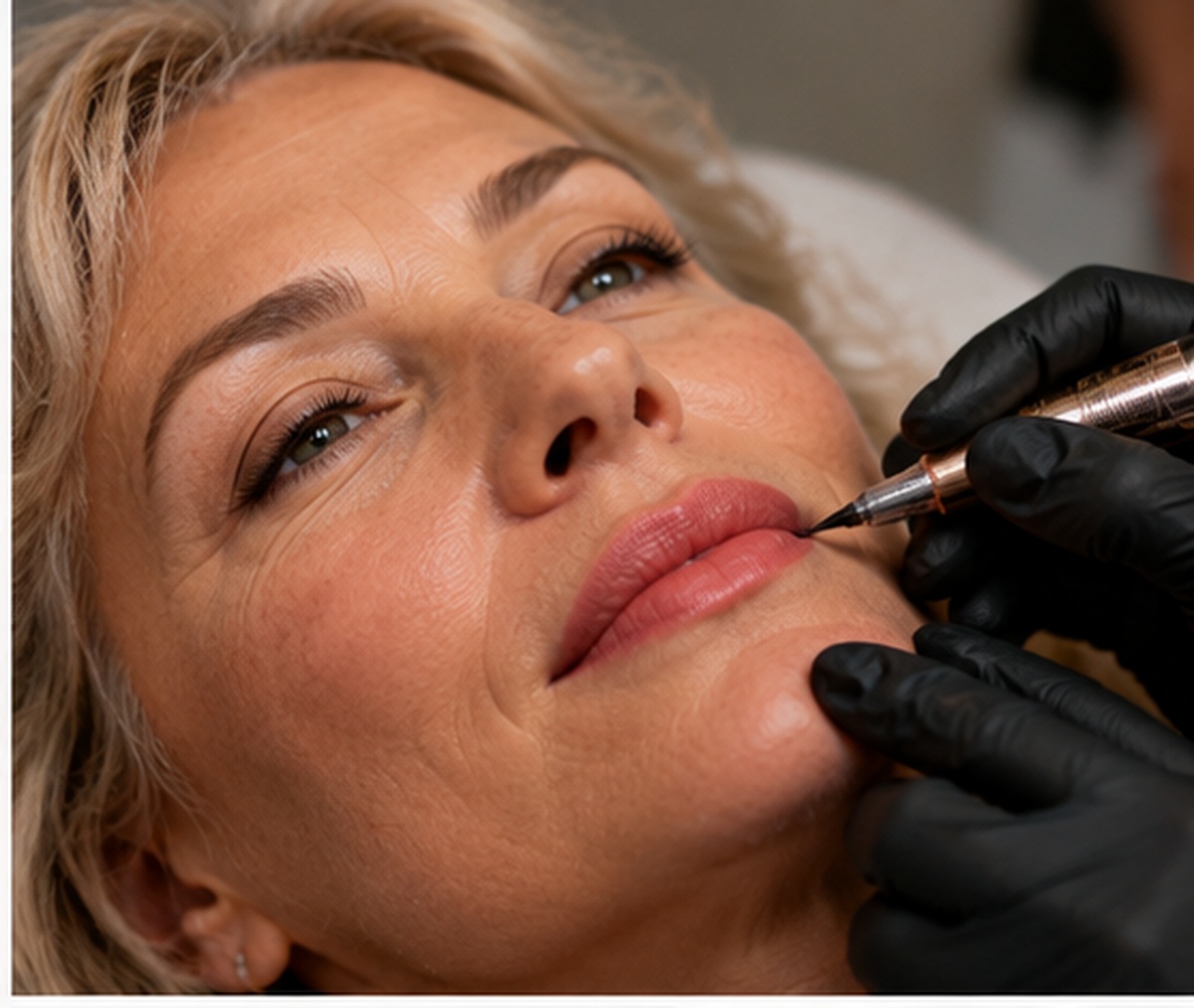
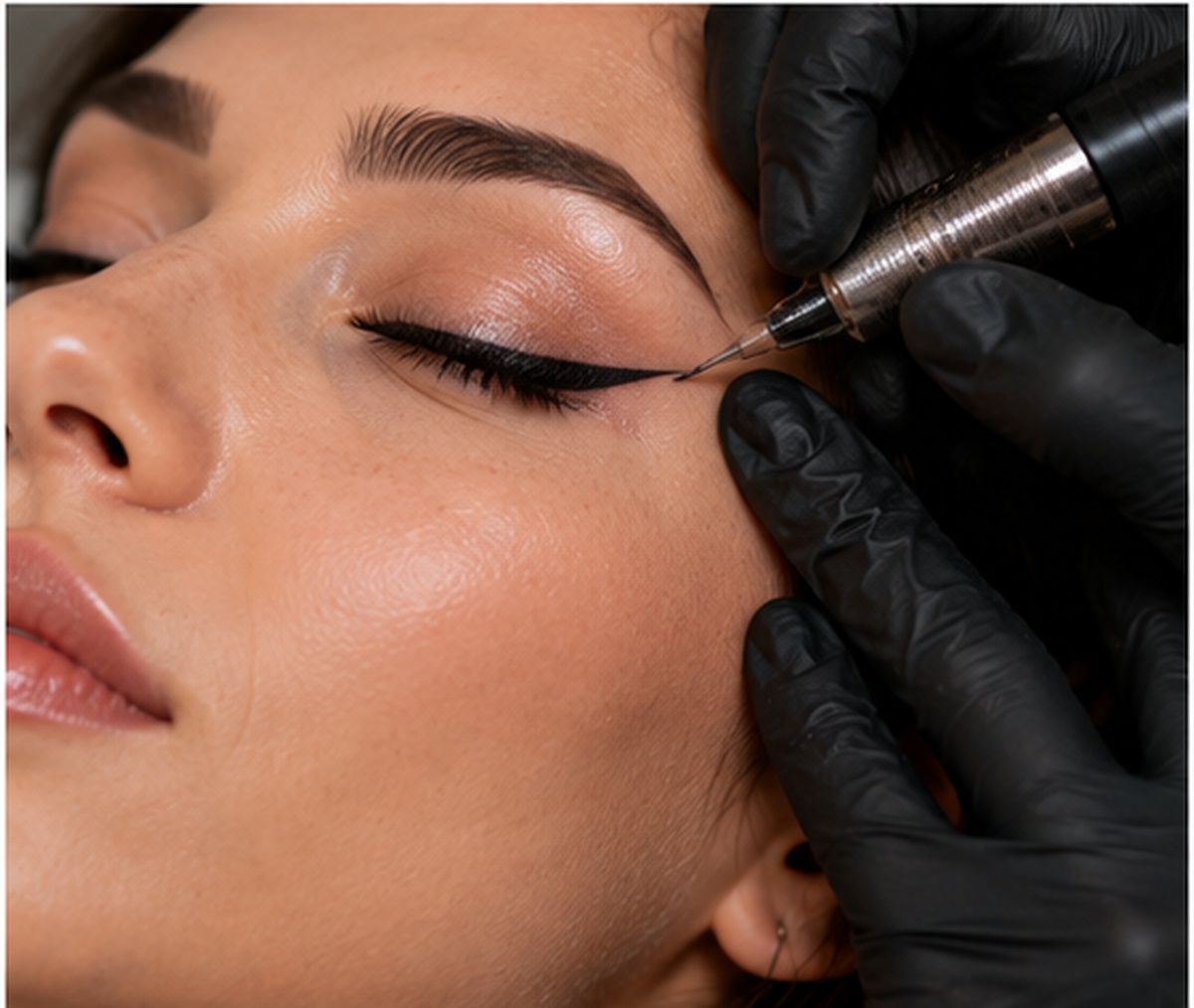
Permanent makeup, also known as permanent cosmetics, derma-pigmentation, micro-pigmentation, semi-permanent makeup and cosmetic tattooing,[1] is a cosmetic technique which employs tattoos (permanent pigmentation of the dermis) as a means of producing designs that resemble makeup, such as eye-lining and other permanent enhancing colors to the skin of the face, lips, and eyelids. It is also used to produce artificial eyebrows, particularly in people who have lost them as a consequence of old age, disease, such as alopecia areata, alopecia totalis, chemotherapy, or a genetic disturbance, and to disguise scars and hypopigmentation in the skin such as in vitiligo.[2] It is also used to restore or enhance the breast's areola, such as after breast surgery, or to give an illusion of more hair volume to the scalp.
The most widely documented first use of permanent makeup treatment was done by the famous U.K. tattoo artist Sutherland MacDonald.[3] In 1902, at his parlor, #76 Jermyn Str., London, he "perfected his method of giving a lasting complexion of the utmost delicacy to pale cheeks."[4] The tattooist George Burchett, a major developer of the technique in the 1930s, described in his memoirs how beauty salons tattooed many women without their knowledge, offering it as a "complexion treatment ... of injecting vegetable dyes under the top layer of the skin."[5][6] Permanent makeup became much more commonplace beginning in the 1970s and 1980s, when it was used to address hair and pigment loss due to disease,[7] and now it is considered very normal.[8]
One may opt for permanent makeup for a plethora of reasons. For some, it can replace the daily application of traditional makeup products in favor of a more lasting solution.[9] This is especially useful for older women whose eyesight might not be good enough to apply the makeup[10] or who have degenerative diseases such as Parkinson's which severely limits motor ability.[7] Others may have the procedure to restore color areas that have lost it due to disease. This includes micro pigmentation for people with alopecia and vitiligo, and areola recoloring for breast cancer patients. Permanent makeup is also a common practice in some African cultures, who use certain tattoos to signify status.[8][2]
As with any tattoo, there are cases of undesired results, whether that be from the initial application or degradation over time.[11] Since this is the case, patients should come in with realistic expectations of what the makeup will look like.[10] One factor that heavily influences how the cosmetic tattoo looks is skin tone. This is because the same color may look different on different skin tones. Another factor that affects the appearance of these tattoos is sun exposure and lifestyle, which can fade the tattoos.[12]
As with any occupation, permanent makeup technicians need to complete required training in order to practice, although these requirements vary from state to state. The average technician completes an apprenticeship around nine months in length; however, certification programs vary from a single day to four years.[1][10] Once they complete their certification, the technician must submit various documents, including proof of certification, apprenticeship, and insurance, before practicing.[10]
Permanent cosmetics technicians are urged to comply with "standard precautions" and a uniform code of safe practice while performing cosmetic tattooing procedures.[13][14] This includes assessing whether the patient should receive permanent makeup at all and informing adequately informing them about the risks associated with the practice.[10]
In a study done regarding the possible complications of permanent makeup, the most common side effects were itching, redness, and the occasional swelling, all of which tended to heal after a few days.[15] While uncommon, permanent makeup can potentially come with more serious complications, including allergic reactions to the pigments, infection, granulomas, keloids, bleeding, crusting, loss of eyelashes, or general damage to the tattooed area.[11][16] Although properly trained technicians will maintain sterile conditions during application,[17] the use of unsterilized tattooing instruments may also infect the patient with serious diseases such as HIV and hepatitis.
On very rare occasions, people with permanent makeup have reported swelling or burning in the affected areas when they underwent magnetic resonance imaging (MRI).[18] Nevertheless, most such cases indicated that poor quality pigments, pigments adulterated with heavy metals, and pigments with diamagnetic properties may have been the causative factors.[19][20] Permanent makeup can also reportedly affect the quality of an MRI image, however, complications can be avoided as long as medical professionals are previously informed.[11]
In the United States, the inks used in permanent makeup are subject to approval as cosmetics by the Food and Drug Administration. While certain pigments in tattoos lack FDA approval for use in permanent cosmetics, competing public health priorities and lack of safety problems have consequently caused loose regulations around what color pigments tattoo inks can contain. Thus, there is little regulation on the type of inks used, with some pigments not approved for skin contact or refined only to an industrial-grade level, i.e. printers' ink, automobile paint, etc..[21]
If a tattooist lacks proper training, patients run the risk of the artist injecting the ink too deep into their skin, causing the pigment to migrate into the surrounding tissue. As a result, the makeup may appear blurry and lack definition for thin line work.[11] Due to their lymphatic distribution, older patients may have an increased risk for pigment migration following permanent eyelash makeup,[22] although migration is generally avoidable by not over-working swollen tissue. Removing migrated pigment is a difficult and complicated process, so it must be avoided if possible.[23]
As with tattoos, permanent makeup can be difficult, or even impossible, to remove.[12] Common techniques used for this are laser tattoo removal, dermabrasion (physical or chemical exfoliation), and surgical removal.[23] Different types of chemical removals have also become a popular option for permanent makeup removal.
What is the difference between microblading and ombré brows?
Microblading uses a hand tool to create crisp hair-like strokes for a natural, textured brow, while ombré powder brows use a machine to build a soft shaded gradient for a polished, filled-in look. Microblading suits drier skin; ombré works on nearly all skin types. Xtremities offers both in Mississauga and helps clients choose.
What are combo brows?
Combo brows, also called fusion brows, blend hair strokes at the front of the brow with soft shading through the body and tail, giving both natural texture and defined density. They suit people who find pure microblading too subtle and pure ombré too solid. Xtremities creates combo brows for Mississauga clients who want the best of both.